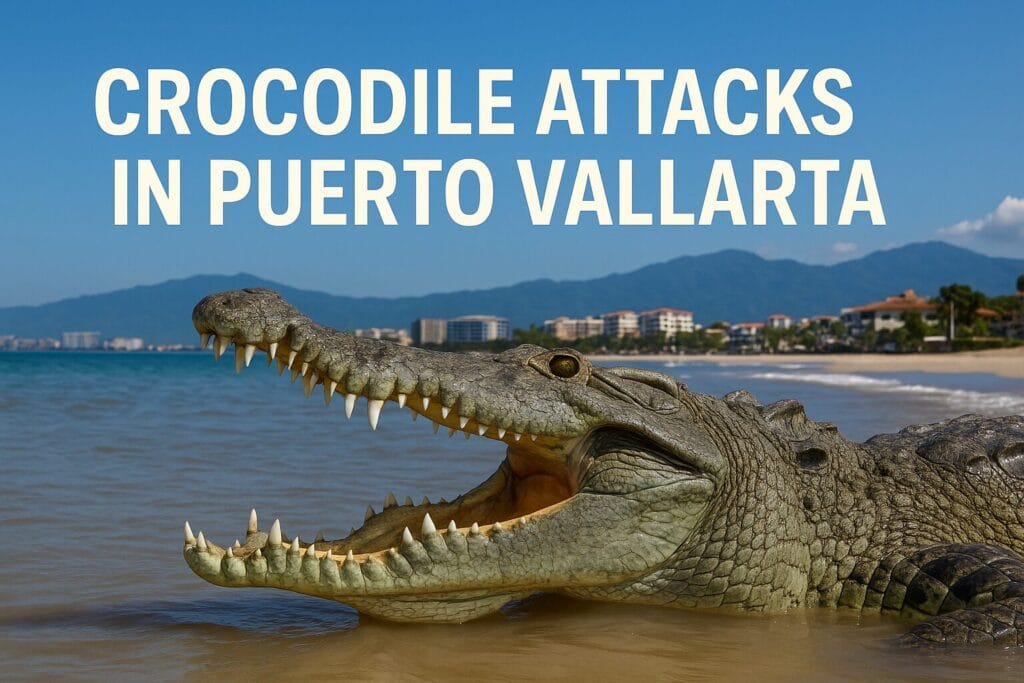
If you’re wondering “Are there crocodiles in Puerto Vallarta?” — the short answer is yes, but don’t panic. While Puerto Vallarta crocodiles are part of the region’s natural ecosystem, encounters are rare and avoidable with a little caution. (And if you’re curious about sharks too, check out this article on sharks in Puerto Vallarta to see what’s myth vs. reality.)
- 🌴 Why Are There Crocodiles in Puerto Vallarta?
- 👍🏼 Towns & Beaches Away From Crocodile Habitat
- ⚠️ Puerto Vallarta Crocodile Sightings and Safety
- 📍 Where Can You See Crocodiles Safely?
- 🚫 Are There Alligators in Puerto Vallarta?
- 📰 Puerto Vallarta Crocodile Attacks: Should You Be Concerned?
- ✅ Final Thoughts: Is It Safe to Visit Puerto Vallarta?
🌴 Why Are There Crocodiles in Puerto Vallarta?
Puerto Vallarta is surrounded by rivers, estuaries, and mangrove ecosystems—ideal habitats for the American Crocodile (Crocodylus acutus). These reptiles thrive in brackish waters near river mouths, estuaries, canals, and coastal lagoons. The areas with the highest likelihood of crocodile sightings include:
- El Salado Estuary (Estero El Salado): A protected urban mangrove reserve near Marina Vallarta.
- El Cora Crocodile Sanctuary: Located in Nuevo Nayarit, along with the surrounding canals and lagoons.
- The Ameca River outlet: Including the Vidanta and Boca de Tomates area, where crocodiles are occasionally seen near the river mouth.
- The Cuale River mouth: Located between Downtown Puerto Vallarta (El Centro) and the Romantic Zone, where the river meets Banderas Bay.
Crocodiles are strongly associated with these habitats and are rarely found on open beaches away from rivers and mangroves.
Are There Crocodiles in Nuevo Vallarta?
Yes. Nuevo Vallarta also borders river and mangrove habitats, particularly near the Ameca River and the sanctuary. Crocodiles are occasionally seen in the canals, golf courses, and nature reserves in this area. However, attacks or dangerous encounters remain extremely rare.
Are There Crocodiles in Bucerías?
Not likely at all, and there have been no known attacks in Bucerías.
Are There Crocodiles in Punta Mita?
Crocodiles in Punta Mita are very uncommon, but not impossible. The area is more isolated from major rivers, making encounters unlikely. Still, some nearby golf courses and estuaries (like La Lancha or Litibú) may host occasional crocodile activity. Resorts are vigilant, and any sightings result in swift beach closures and alerts.
Are There Crocodiles in Sayulita?
It’s very unlikely to see crocodiles in Sayulita. This popular surf town does not have major river outlets or large estuaries within the main beach area. However, like all of Riviera Nayarit, wildlife can surprise you — so it’s always good to stay alert near remote estuary zones or lagoons just outside of town.
👍🏼 Towns & Beaches Away From Crocodile Habitat
While crocodiles can be found near rivers, estuaries, mangroves, and lagoons, many of the region’s most popular beach destinations are far from this habitat and have an extremely low risk of crocodile encounters.
Some of the safest areas include:
- Bucerías
- La Cruz de Huanacaxtle
- Punta Mita
- Sayulita
- The South Shore beaches, including Las Ánimas, Quimixto, Majahuitas, and Yelapa.
As a general rule, avoid swimming near river mouths, estuaries, and mangrove wetlands, especially after heavy rains when crocodiles may be more active. By following these simple precautions, visitors can safely enjoy the beautiful beaches throughout Banderas Bay.
⚠️ Puerto Vallarta Crocodile Sightings and Safety
Most crocodiles in Puerto Vallarta avoid human activity. However, sightings may increase during the rainy season (June–October), when swollen rivers may carry them downstream into the bay or nearby beaches. Some important safety tips:
- Avoid swimming near river mouths, especially after heavy rains.
- Do not swim at night, when crocodiles are more active.
- Respect beach flag warnings:
- 🟢 Green: Safe to swim
- 🔵 Blue or ⚫ Black: Crocodile sighting — do not enter the water
📍 Where Can You See Crocodiles Safely?
If you’re interested in observing these fascinating reptiles responsibly:
El Salado Estuary
- A 169-hectare protected mangrove area in the city.
- Guided tours are available for wildlife viewing, including birds, iguanas, and crocodiles.
El Cora Crocodile Sanctuary (Nuevo Vallarta)
- A small wildlife sanctuary and rescue center.
- Visitors can learn about crocodile conservation and view animals up close.
🚫 Are There Alligators in Puerto Vallarta?
No, Puerto Vallarta does not have alligators. The confusion is common, but alligators are native to the southeastern U.S., not Mexico. What you see here are American Crocodiles, which are generally more reclusive than their aggressive alligator cousins.
📰 Puerto Vallarta Crocodile Attacks: Should You Be Concerned?
While very rare, Puerto Vallarta crocodile attacks have occurred. The most widely reported incident was in July 2021, when a teenage tourist was bitten while swimming at night near the Marriott Resort. She survived with minor injuries. It’s worth noting that this hotel is located just 2 km from the Ameca River outlet, a known crocodile habitat. The takeaway? Night swimming near rivers is never a good idea.
✅ Final Thoughts: Is It Safe to Visit Puerto Vallarta?
Absolutely. Crocodiles in Puerto Vallarta are part of the natural environment, but authorities closely monitor sightings. If a crocodile is spotted, beaches are promptly closed, and safety flags are updated. Most visitors never see one — and if you do, it’s usually from a safe distance on a nature tour. So go ahead and enjoy your trip — just stay aware of your surroundings, respect nature, and follow local safety guidance.